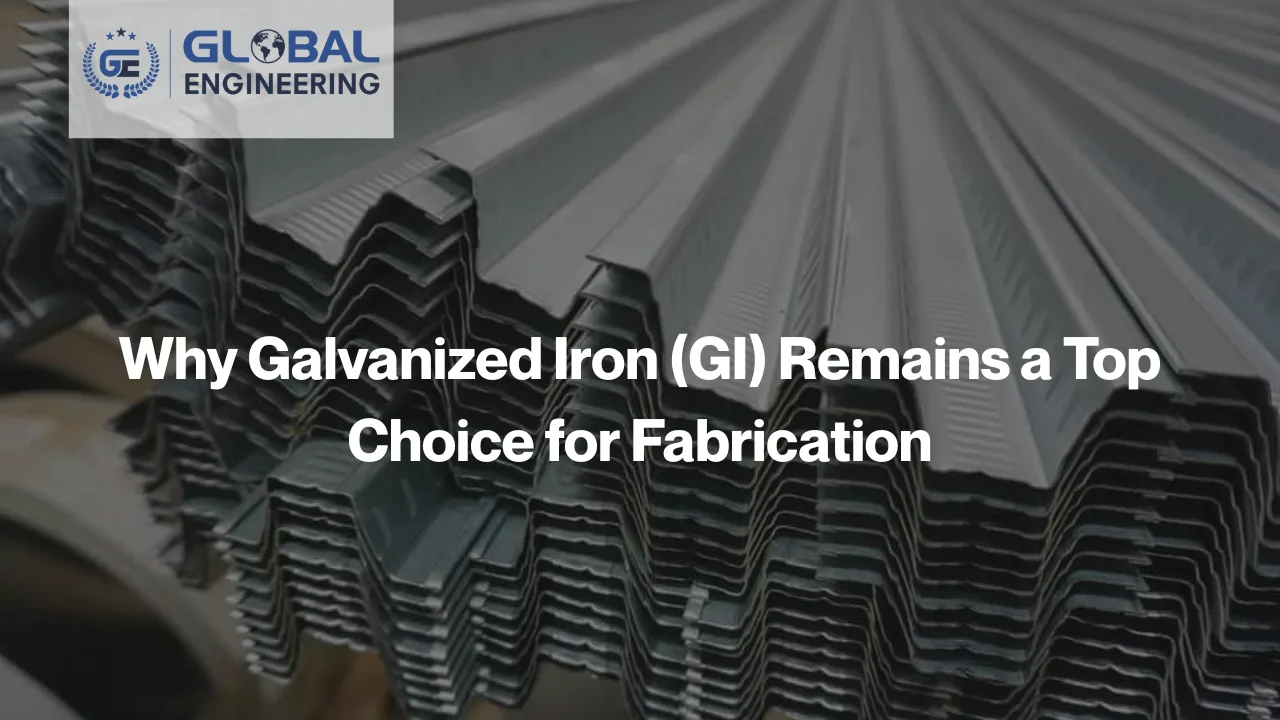
Galvanized Iron (GI) continues to be one of the most preferred materials in fabrication due to its strength, durability, and excellent resistance to corrosion. GI products are made from iron or steel that is coated with a protective layer of zinc, providing a corrosion-free surface. This zinc coating helps protect the base metal from rust and environmental damage, ensuring long-lasting performance even in harsh conditions, making it ideal for industrial, commercial, and infrastructure applications.
Hot dip galvanizing process used to protect iron and steel by coating them with a layer of zinc. This process is directly related to Galvanized Iron (GI) products, which are widely used in construction, fabrication, and industrial applications due to their high corrosion resistance and durability.
In this process, cleaned steel or iron components are dipped into a bath of molten zinc at high temperature. Coated zinc forms a strong metallurgical bond with the base metal, creating a protective layer. This is how GI (Galvanized Iron) materials are produced, ensuring long-lasting protection against rust and environmental damage.
What is GI Material? How it is Made
To understand what GI material is, it is important to know its basic structure. GI material refers to iron or steel that has been coated with zinc through a process called galvanization. This protective zinc layer acts as a barrier between the metal surface and environmental factors like moisture, oxygen, and chemicals.
The most common method used is hot-dip galvanizing, where steel or iron is dipped into molten zinc. This creates a strong bonded coating that protects the base metal for many years.
How Galvanized Iron is Made
The process of making galvanized iron involves several steps:
- Cleaning the metal surface – Removing dirt, oil, and rust
- Pickling process – Treating with acid to clean the surface
- Fluxing – Preparing the surface for zinc coating
- Hot-dip galvanizing – Dipping into molten zinc
- Cooling and finishing – Forming a strong protective layer
The Role of Zinc Coating in Galvanizing
Zinc coating plays a vital role in Galvanized Iron (GI) products used in fabrication and industrial applications. Zinc acts as a sacrificial anode, meaning it corrodes first before the iron or steel base material. This ensures that even if the GI surface gets scratched or exposed, the underlying metal remains protected from rust and corrosion.
Zinc layer also forms a strong barrier against moisture, air, chemicals, and environmental exposure. This dual protection significantly increases the durability and service life of GI materials used in construction, infrastructure, and manufacturing industries.
Common Specifications and GI Fabrication Standards
To ensure quality and reliability, GI products are manufactured according to national and international standards. These standards define proper coating thickness, adhesion strength, and testing methods for consistent performance.
Common standards include:
- IS 277 – Requirements for galvanized steel sheets
- IS 4759 – Hot dip galvanizing of fabricated steel structures
- ASTM A123 – Zinc coating standards for iron and steel products
- EN ISO 1461 – General specifications for hot dip galvanized coatings
These standards ensure that GI materials deliver uniform quality, high corrosion resistance, and long-term performance across different industrial applications.
Benefits of Galvanized Iron (GI) for Fabrication
Galvanized Iron (GI) is one of the most widely used materials in fabrication and industrial manufacturing due to its excellent durability, strength, and corrosion resistance. It is produced by coating iron or steel with a protective layer of zinc, which enhances its performance in harsh environments.
1. Excellent Corrosion Resistance
GI provides strong protection against rust and corrosion. The zinc coating acts as a barrier and prevents moisture, air, and chemicals from reaching the base metal.
2. Long Service Life
Due to its protective coating, GI materials last much longer compared to normal iron or steel, making them ideal for long-term use.
3. Low Maintenance
GI products require minimal maintenance, reducing repair and replacement costs over time.
4. High Strength and Durability
Galvanized Iron maintains the strength of steel while adding extra protection, making it suitable for heavy-duty fabrication work.
5. Cost-Effective Solution
Although initial cost may be slightly higher, GI offers long-term savings due to its durability and low maintenance needs.
6. Suitable for Harsh Environments
GI performs well in outdoor, coastal, and industrial environments where exposure to moisture and chemicals is high.
7. Easy Fabrication
It can be easily cut, welded, and shaped, making it highly suitable for different fabrication requirements.
Applications of Galvanized Iron
Galvanized iron use is extremely wide across industries due to its strength and resistance to corrosion. Some common applications include:
- Construction and building structures
- Roofing sheets and wall panels
- Water pipelines and storage tanks
- Automotive parts
- Agricultural equipment
- Electrical poles and transmission towers
- Industrial fabrication works
- HVAC and ducting systems
GI (Galvanized Iron) vs Other Material
Galvanized Iron (GI) is widely used in fabrication and construction because it offers a protective zinc coating that prevents rust and corrosion. Compared to other materials, it provides a balanced mix of strength, durability, and cost-effectiveness.
GI vs Mild Steel
- GI: Rust-resistant due to zinc coating
- Mild Steel: Strong but corrodes quickly without protection
GI vs Stainless Steel
- GI: More economical and suitable for general use
- Stainless Steel: Highly corrosion-resistant but expensive
GI vs Aluminum
- GI: Stronger and better for structural applications
- Aluminum: Lightweight but less strong for heavy fabrication
GI vs Painted Steel
- GI: Long-lasting protection through zinc layer
- Painted Steel: Requires frequent repainting and maintenance
Galvanized Iron (GI) remains a preferred choice because it offers an ideal balance of strength, corrosion resistance, and affordability compared to other materials, making it suitable for a wide range of industrial and fabrication applications.
Pricing Trends and Market Outlook (Short)
GI (Galvanized Iron) prices mainly depend on steel and zinc rates, along with demand from construction and industrial sectors. In recent times, GI prices have shown slight fluctuations due to changes in raw material costs and market demand.
Factors determine for GI Pricing
- Steel price fluctuations – Directly impacts GI product cost
- Zinc cost variation – Affects coating price and final GI rates
- Construction demand – High demand increases market prices
- Industrial growth – Drives steady consumption of GI materials
- Import & export policies – Influence supply and availability
- Fuel & transportation cost – Affects overall product pricing
- Seasonal demand – Construction season increases price movement
- Raw material supply chain – Availability impacts market stability
Overall, GI remains a cost-effective and stable material compared to many alternatives, making it widely used in fabrication and infrastructure projects.
Market Outlook
The future demand for GI products is expected to remain positive, driven by continuous growth in infrastructure, housing, and industrial development. Increasing use of corrosion-resistant materials further supports steady market growth.
Understanding what is gi material and the benefits of galvanized iron use helps industries make better decisions for long-term performance and cost efficiency. With its strength, durability, and protection, GI continues to be one of the most reliable materials in modern engineering.
Q1. What is GI full form?
GI stands for Galvanized Iron, which is iron or steel coated with a layer of zinc to prevent rusting.
Q2. What is GI material used for?
GI material is used in construction, fabrication, roofing sheets, pipes, electrical poles, and industrial structures.
Q3. Why is GI better than normal steel?
GI is better because it has a zinc coating that protects it from corrosion, increasing its lifespan.
Q4. What is hot dip galvanizing?
It is a process where steel or iron is dipped into molten zinc to create a protective coating.
Q5. Is GI material rust-proof?
GI is not completely rust-proof, but it is highly corrosion-resistant due to zinc protection.
Q6. Where is GI commonly used?
It is widely used in construction, agriculture, automotive parts, and industrial fabrication.
Q7. What are the advantages of GI?
It offers strength, durability, low maintenance, cost-effectiveness, and long service life.
Q8. Does GI require maintenance?
GI requires very low maintenance compared to normal iron or steel.
Q9. Is GI suitable for outdoor use?
Yes, GI is ideal for outdoor and harsh environments due to its corrosion resistance.
Q10. Why is GI widely preferred in fabrication?
Because it provides a perfect balance of strength, durability, and rust protection at a reasonable cost.