
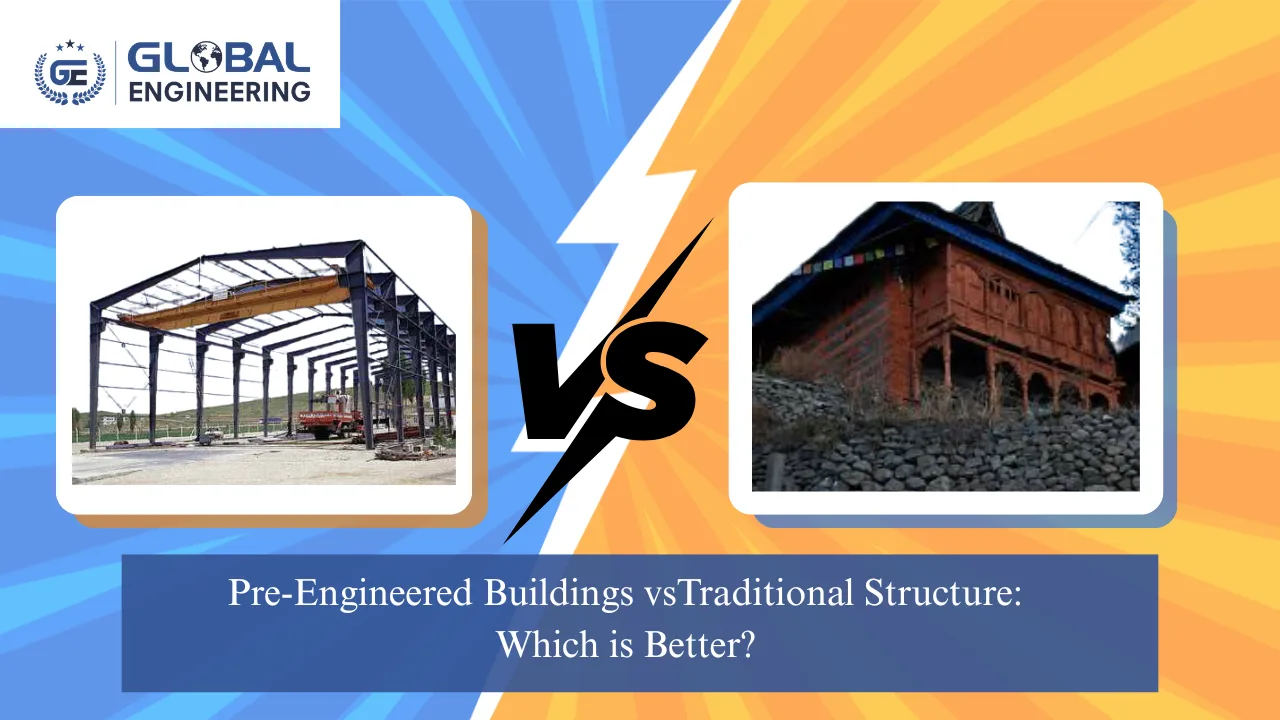
Pre-Engineered Buildings are steel structures that are pre-made in a factory and then installed at the required site, making them highly efficient, easy to assemble, and portable, allowing relocation or expansion as per changing project needs. In modern industrial applications, these prefab structures have become increasingly popular due to their cost-effectiveness, flexibility, portability, and robust construction, making them an ideal choice for fast-growing industries.
In this blog, we provide detailed information about Pre-Engineered Building structures and clearly differentiate them from traditional structures to help you understand their features, benefits, and suitability for modern construction needs.
What is PEB Structure? Pre Engineered Building
Pre-Engineered Buildings (PEB) are modern steel structures that are designed and manufactured in a factory using advanced engineering techniques. Every component—such as columns, beams, and roofing panels—is fabricated with precision and then transported to the construction site for assembly.
Peb structures are lightweight yet strong steel structures ensure better resistance to harsh weather conditions and seismic activities, making them a reliable choice for modern infrastructure projects.
Understanding Traditional Structures
Traditional structures are built entirely on-site using conventional construction materials such as bricks, cement, sand, steel reinforcement, and concrete. This construction method has been used for decades and is still widely used in residential buildings, small commercial projects, and customized architectural designs. The process involves multiple stages, including foundation work, brickwork, concrete casting, curing, and finishing.
Comparison Between PEB and Traditional Structures
1. Construction Process
Pre-Engineered Buildings (PEB) are fabricated in a controlled factory environment using pre-designed steel components, which are later transported to the site for assembly. This process ensures faster construction and consistent quality. In contrast, traditional structures are built entirely on-site using materials like cement, concrete, and bricks, making the construction process longer and more labor-intensive.
2. Construction Time: Features
One of the major advantages of Pre-Engineered Buildings (PEB) is the significantly reduced construction time. Since most of the components are pre-manufactured in a factory under controlled conditions, on-site work is mainly limited to assembly and installation, which speeds up project completion. Traditional construction, on the other hand, involves time-consuming activities such as curing of concrete, masonry work, and on-site fabrication, leading to longer project durations.
- Faster project completion due to ready-to-assemble components
- Reduced dependency on on-site labor
- Minimal delays caused by weather conditions
- Streamlined construction process with pre-planned designs
- Quick installation reduces overall project cost and time overruns
- Ideal for projects with tight deadlines and large-scale requirements
3. Cost Efficiency – Why Choose PEB Structures
PEB structures are generally more cost-effective due to reduced labor requirements, minimal material wastage, and shorter project timelines. Traditional construction tends to be more expensive because of higher labor costs, greater material consumption, and longer construction periods.
Why Choose PEB Structures?
- Lower overall construction cost
- Faster project completion
- Reduced labor and material wastage
- Lower maintenance expenses
- Better long-term return on investment
4. Design Flexibility: Peb steel structure can be customized
PEB offers high flexibility in design and allows easy expansion or modification in the future. The modular nature of PEB makes it ideal for growing businesses, as structures can be customized in terms of size, layout, and functionality. Traditional structures, once built, are difficult and costly to modify or expand due to their rigid design and construction methods, making PEB a more practical and future-ready option.
5. Strength and Durability
Pre-Engineered Buildings use high-quality steel, making them strong, durable, and capable of withstanding harsh weather conditions. Traditional buildings are also strong but may develop issues like cracks or structural wear over time, especially if not properly maintained.
6. Maintenance Requirements
PEB structures require minimal maintenance due to their durable materials and precision engineering. Traditional structures, however, often require regular maintenance such as repairs, plastering, and waterproofing to maintain structural integrity.
7. Environmental Impact & Strength of PEB Steel Structure
PEB structures are considered more eco-friendly as they are made from recyclable steel and generate significantly less construction waste compared to traditional methods. The efficient manufacturing process reduces material usage and minimizes environmental impact.
PEB steel structures offer excellent strength and durability, making them resistant to harsh weather conditions and reducing the need for frequent repairs or replacements. Traditional construction, on the other hand, consumes more natural resources like sand, cement, and water, and often leads to higher environmental impact.
8. Applications
PEB is widely used for industrial buildings, warehouses, commercial complexes, and large infrastructure projects where speed and efficiency are critical. Traditional construction is commonly used for residential buildings and projects requiring complex architectural designs.
Pre-Engineered Buildings in India: A Growing Construction Trend
Pre-Engineered Buildings (PEB) are gaining popularity in India due to their fast construction, cost-effectiveness, and durability. These steel structures are manufactured in factories and assembled on-site, making them quicker to build and more efficient than traditional construction methods. With flexible design options, low maintenance, and eco-friendly features, PEB structures are becoming the preferred choice for industrial, commercial, and warehouse projects across the country.
Which Is Right for You – Pre-Engineered Buildings or Traditional Structures?
PEB structures and traditional structures each offer their own features, advantages, and efficiency based on different project needs. Choosing between a Pre-Engineered Building and a traditional structure depends on factors such as project requirements, budget, timeline, and future expansion plans.
If your priority is faster construction, cost efficiency, flexibility, and long-term durability, PEB is the ideal choice. Traditional construction, on the other hand, is more suitable for projects that require detailed architectural design and complex structures. With the expertise of Global Engineering- Pre Engineering Building Manufacturers, businesses can make the right choice and achieve reliable, efficient, and future-ready construction solutions.