
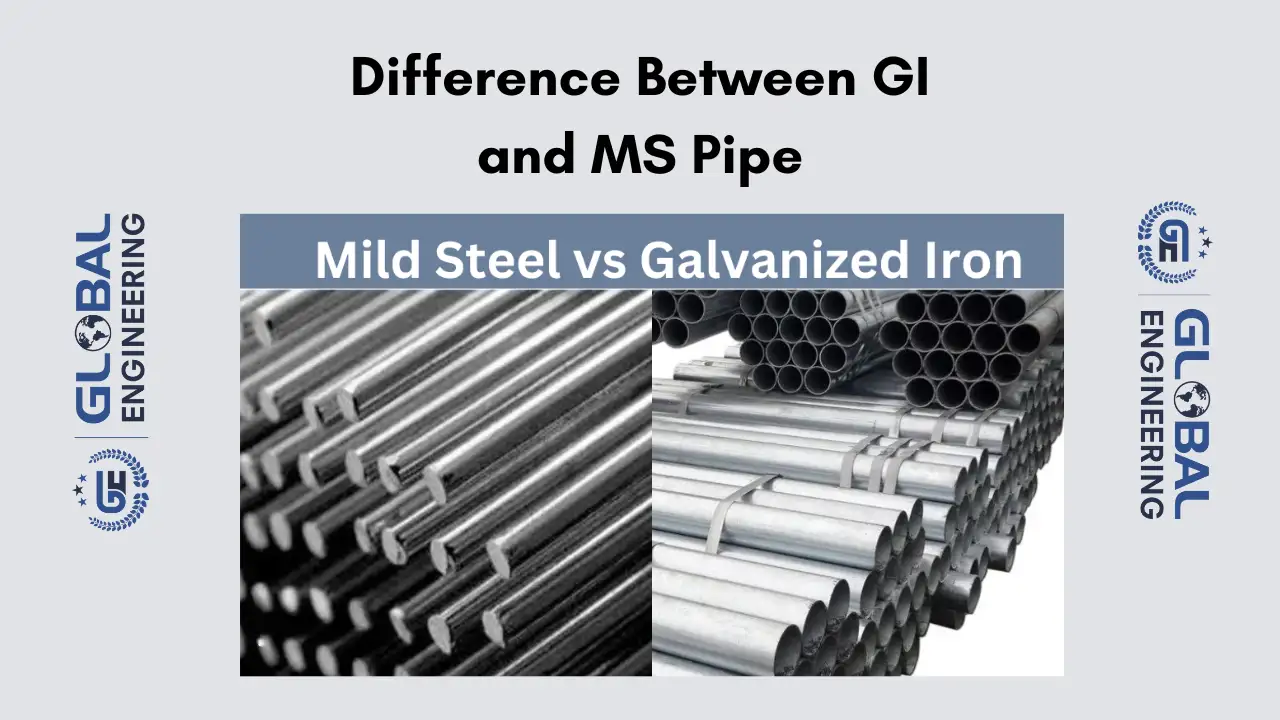
Pipes play a crucial role in construction, infrastructure, and industrial applications. Among the most commonly used types are GI (Galvanized Iron) pipes and MS (Mild Steel) pipes. While both are widely used, they differ significantly in terms of composition, properties, applications, and cost. Understanding the difference between GI and MS pipes helps in selecting the right material for specific requirements.
What is a GI Pipe?
GI stands for Galvanized Iron, which is a zinc-coated material that helps prevent corrosion. A GI pipe is essentially a steel pipe coated with a protective layer of zinc through a process called galvanization. This coating acts as a barrier against rust and environmental damage, making GI pipes highly suitable for applications where exposure to moisture, water, and humid conditions is common, such as plumbing, water supply systems, and outdoor structures.
The galvanization process increases the durability of the pipe and extends its lifespan, especially in outdoor or humid environments. GI pipes are widely used in water supply systems, plumbing, and agricultural applications.
Features of GI (Galvanized Iron) Pipes
GI pipes are widely used due to their durability and resistance to harsh environmental conditions. Some of the key features include:
- Corrosion Resistance: Zinc coating protects the pipe from rust and corrosion
- Long Service Life: Highly durable and suitable for long-term use
- Low Maintenance: Requires minimal upkeep compared to other metal pipes
- High Strength: Can withstand pressure and external impact
- Smooth Surface Finish: Ensures better flow of water and reduces friction
- Weather Resistant: Performs well in outdoor and humid conditions
- Easy Installation: Lightweight and easy to handle and fit
These features make GI pipes an ideal choice for plumbing, water supply, irrigation, and structural applications.
GI Pipes Are Commonly Used In:
- Water supply systems
- Plumbing and drainage
- Agricultural irrigation
- Outdoor fencing and structures
Advantages of GI Pipes
GI pipes are preferred in situations where corrosion resistance is a priority. Some key benefits include:
- Long lifespan due to zinc coating
- Low maintenance requirements
- Suitable for water and outdoor use
- Resistant to rust and environmental damage
What is an MS Pipe?
MS (Mild Steel) pipe is made from low carbon steel, which gives it strength, flexibility, and ease of fabrication. Unlike GI pipes, MS pipes are not coated with zinc, making them more prone to rust when exposed to moisture or harsh environmental conditions.
However, MS pipes are highly versatile and are commonly used in structural applications, industrial piping, and fabrication work due to their strength and weldability.
Features of MS (Mild Steel) Pipes
MS (Mild Steel) pipes are widely used in construction and industrial applications due to their strength and flexibility. Key features include:
- High Strength: Strong and suitable for heavy-duty structural use
- Good Weldability: Easy to weld, cut, and fabricate as per requirement
- Cost-Effective: More affordable compared to GI pipes
- High Durability: Performs well under pressure and load conditions
- Versatile Applications: Used in construction, fabrication, and industrial pipelines
- Smooth Surface Finish: Ensures efficient flow in piping systems
- Customizable: Can be shaped and modified easily for different uses
These features make MS pipes ideal for structural frameworks, industrial use, and fabrication work.
MS Pipes Are Commonly Used In:
- Building construction and frameworks
- Industrial pipelines
- Machinery and fabrication
- Oil and gas sectors
Advantages of MS Pipes
MS pipes are widely used due to their strength and flexibility. Key advantages include:
- High strength and durability
- Easy to weld and fabricate
- Cost-effective for large projects
- Suitable for structural and industrial use
GI Pipe vs MS Pipe
When selecting the right piping solution for industrial or construction use, understanding the difference between GI and MS pipes is essential. Companies like Global Engineering provide high-quality pre engineering building structure and piping solutions suited for various applications. GI (Galvanized Iron) and MS (Mild Steel) pipes differ in composition, performance, and usage, making each suitable for specific needs.
| Difference | Explanation |
|---|---|
| Composition | The difference between GI and MS pipes in terms of composition is that GI pipes are made up of low-carbon steel with a zinc coating, whereas MS pipes are made of mild steel containing around 0.25% carbon. |
| Uses | GI pipes are commonly used in water supply systems, plumbing, and environments requiring corrosion resistance, while MS pipes are used in structural framing, pipelines, industrial machinery, and HVAC systems. |
| Corrosion Resistance | GI pipes are highly resistant to rust and corrosion due to their zinc coating, whereas MS pipes are prone to corrosion unless protected with paint or varnish. |
| Ease of Use | GI pipes are lightweight and easy to install, making them ideal for long-distance use, while MS pipes are heavier, stronger, and suitable for complex and heavy-duty applications. |
| Welding | MS pipes are easier to weld and fabricate into different shapes as per requirements, whereas GI pipes require more care during welding due to the zinc coating. |
| Weight | GI pipes are generally lighter compared to MS pipes. |
| Size | GI pipes are typically available in standard sizes ranging from 15 mm to 150 mm, while MS pipes can be manufactured in a wide variety of shapes and sizes as per project specifications. |
Which One Should You Choose?
The choice between GI and MS pipes depends on your specific application:
- Choose GI pipes when you need corrosion resistance and long-term durability in moist or outdoor environments.
- Choose MS pipes when strength, flexibility, and cost-effectiveness are the primary requirements.
Conclusion
Both GI and MS pipes have their own advantages and are suitable for different applications. GI pipes are ideal for environments where protection against rust is essential, while MS pipes are better suited for structural and heavy-duty applications. Understanding their differences helps in making the right decision for your project