
Line Tower Structure Manufacturers
Global Engineering is a leading Transmission Line Tower Structure Manufacturer offering high-quality and durable tower solutions for power transmission projects across various industries. Our transmission line towers are engineered with precision to support overhead conductors and ensure the safe, efficient, and reliable transmission of electricity over long distances.
Transmission Line Tower Manufacturers
Our Transmission Line Towers provide a strong and reliable infrastructure for electrical transmission lines, ensuring the continuous and efficient flow of power from generation stations to substations and distribution networks. At Global Engineering, we manufacture high-quality tower structures that are designed to meet stringent industry standards and withstand heavy mechanical loads, high wind pressures, and challenging environmental conditions.
Our Products
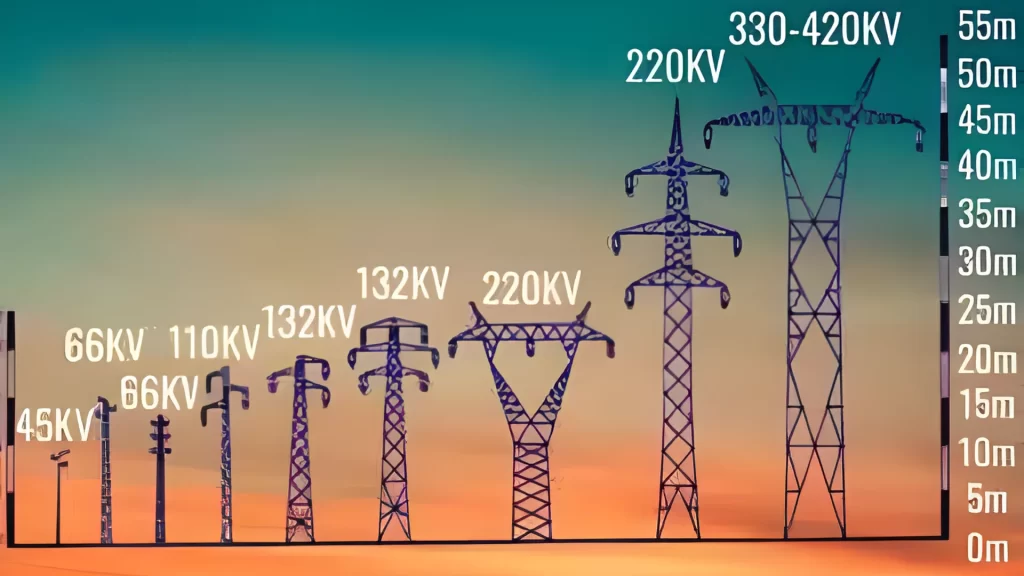
Features: Transmission Line Towers
- High-strength galvanized steel construction
- Excellent corrosion and weather resistance
- Precision-engineered structural design
- Suitable for various voltage levels
- Long operational lifespan
- Low maintenance requirements
- Compliance with industry standards
- Designed for easy installation and assembly
Voltage-Based Classification of Line Tower
| Voltage Level (kV) | Typical Tower Type | Approximate Tower Height (m) | Common Application |
|---|---|---|---|
| 11 kV | Distribution Pole Structure | 8-15 | Local power distribution |
| 33 kV | Light Transmission Tower | 12-20 | Urban and rural distribution networks |
| 66 kV | Single Circuit Transmission Tower | 18-25 | Regional power transmission |
| 110 kV | Medium Voltage Transmission Tower | 20-30 | Industrial and utility transmission |
| 132 kV | Single/Double Circuit Tower | 25-35 | State transmission networks |
| 220 kV | High Voltage Transmission Tower | 30-45 | Long-distance power transmission |
| 275 kV | Heavy Duty Transmission Tower | 35-50 | High-capacity transmission systems |
| 400 kV | Extra High Voltage Tower | 40-55 | National power grid transmission |
| 500 kV | EHV Transmission Tower | 45-65 | Bulk power transfer |
| 765 kV | UHV Transmission Tower | 50-70 | Ultra-long-distance transmission |
| 800 kV HVDC | HVDC Transmission Tower | 55-80 | High-capacity interregional power transfer |
| 1200 kV | UHVAC Transmission Tower | 60-90 | Ultra-high voltage transmission corridors |
Tower Manufacturing Companies in India
Transmission Line Tower is a critical component of the electrical power network, designed to support high-voltage transmission lines between generating stations, substations, and distribution centers. Our line towers are manufactured using premium-grade galvanized steel, ensuring exceptional strength, corrosion resistance, and long service life.
We provide customized transmission tower solutions suitable for different voltage levels, terrains, and project requirements. Our focus on innovation, quality, and customer satisfaction has made us a preferred choice for clients seeking dependable transmission tower structures for critical infrastructure projects. If you are looking for a trusted Transmission Line Tower Structure Manufacturer, Global Engineering offers comprehensive solutions to your project requirements.