Solar power has emerged as a reliable and sustainable solution across residential, commercial, and industrial sectors. While solar panels generate electricity, it is the solar mounting structure that supports the panels, ensures correct alignment, and helps achieve maximum energy output. A well-designed solar structure improves system efficiency, durability, and long-term performance, especially in diverse climatic conditions across India.
What Is a Solar Structure?
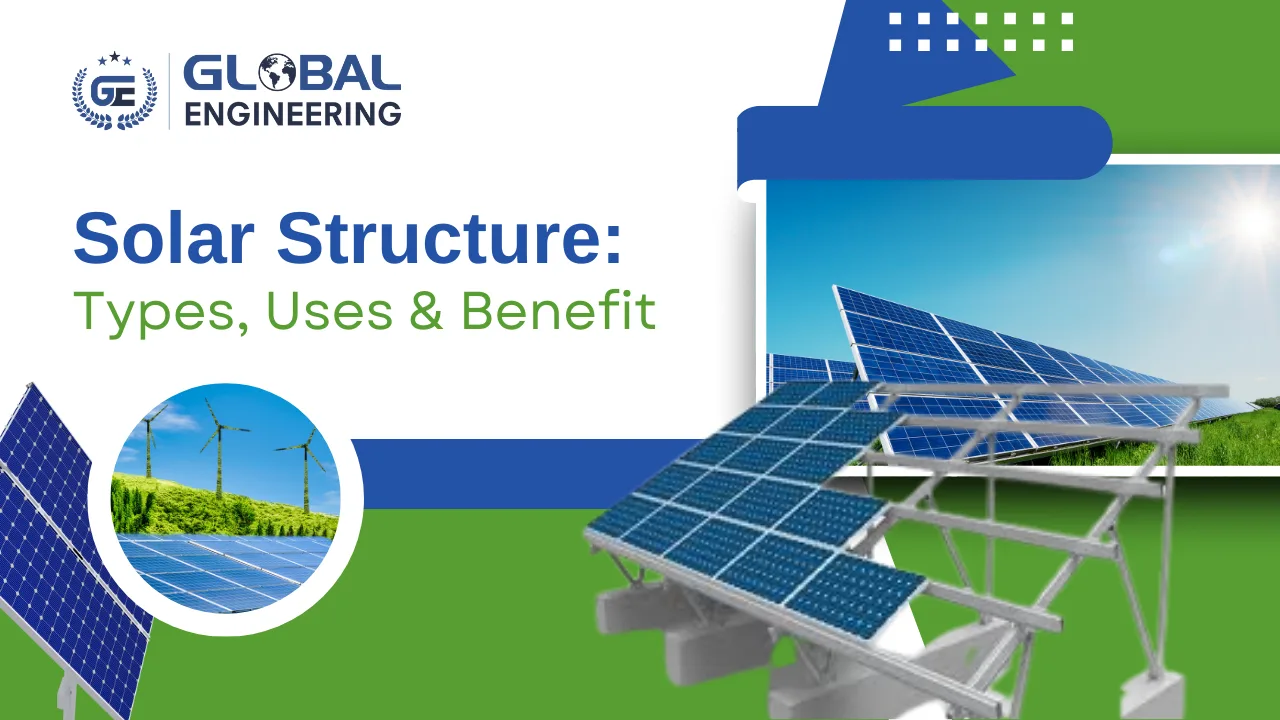
A solar structure is the supporting framework used to mount solar panels securely on rooftops, open land, or special installations. These structures are engineered to hold panels at an optimal angle, resist wind loads, and withstand environmental factors such as rain, heat, and dust. Properly designed solar structures ensure that solar panels remain stable and deliver consistent power generation throughout their lifespan.
Solar Structure Design
Solar structure design plays a crucial role in the performance, safety, and longevity of a solar power system. It involves engineering a robust framework that securely supports solar panels while maintaining the optimal tilt angle and orientation for maximum sunlight exposure. A well-designed solar mounting structure is created by considering factors such as site conditions, wind load, seismic impact, roof or ground strength, and local weather patterns.
High-quality materials like galvanized steel or aluminum are commonly used to ensure corrosion resistance and long service life. Proper solar structure design also focuses on ease of installation, minimal maintenance, and efficient load distribution to protect both the panels and the supporting surface. By combining strength, precision, and functionality, an effective solar structure design enhances energy efficiency, system stability, and overall return on investment for solar installations.
Types of Solar Structures
Solar structures are available in different designs based on installation location, application, and energy requirements. Below are the most common types:
1. Rooftop Solar Structures
Rooftop solar structures are widely used in residential, commercial, and industrial buildings. These structures are designed to fit flat or sloped roofs without damaging the roof surface. They are lightweight yet strong and help maximize solar exposure while maintaining building safety.
2. Ground Mounted Solar Structures
Ground-mounted solar structures are ideal for large-scale solar power plants and open land installations. These structures provide flexibility in orientation and tilt angle, allowing optimal sunlight absorption. They are built using heavy-duty materials to withstand high wind speeds and harsh outdoor conditions.
3. Fixed Tilt Solar Structures
Fixed tilt structures hold solar panels at a fixed angle based on the geographic location. They are cost-effective, easy to install, and require minimal maintenance. Fixed tilt solar structures are commonly used in rooftop and ground-mounted solar systems.
4. Adjustable Tilt Solar Structures
Adjustable solar structures allow the tilt angle of panels to be changed manually or seasonally. This helps improve energy generation throughout the year by optimizing panel orientation according to the sun’s position.
5. Solar Tracking Structures
Solar tracking structures automatically follow the sun’s movement during the day. Though more expensive, they significantly increase energy output and are mainly used in large solar power projects where higher efficiency is a priority.
6. Car Parking and Shade Solar Structures
These structures are designed for parking areas, providing shade while generating solar power. They are increasingly popular in commercial spaces, malls, and institutions.
Materials Used in Solar Structures
Solar structures are typically manufactured using:
- Hot-dip galvanized steel for strength and corrosion resistance
- Mild steel with protective coatings
- Aluminum for lightweight applications
Manufacturers like Global Engineering focus on precision fabrication and high-quality materials to ensure durability, load-bearing capacity, and long service life.
Uses of Solar Structures:
- Used to securely mount and support solar panels
- Helps maintain proper tilt and orientation for maximum energy generation
- Suitable for rooftop, ground-mounted, and open-area solar installations
- Provides stability and protection against wind and weather conditions
- Used in residential, commercial, and industrial solar power projects
Benefits of Solar Mounting Structures
1. Enhanced System Stability
Solar structures provide a strong foundation that keeps panels secure even during extreme weather conditions such as high winds or heavy rainfall.
2. Improved Energy Efficiency
By maintaining the correct tilt and orientation, solar structures help maximize sunlight exposure and overall power generation.
3. Long-Term Durability
High-quality solar structures are corrosion-resistant and designed to last for decades with minimal maintenance.
4. Easy Installation and Maintenance
Modern solar structures are designed for quick installation and easy access for cleaning and maintenance, reducing overall operational costs.
5. Customization Options
Solar structures can be customized based on site conditions, load requirements, and project size. Global Engineering offers customized solar structure solutions to meet specific customer and project needs.
6. Cost-Effective Investment
A well-designed solar structure protects panels from damage and improves system performance, leading to better return on investment over time.
Why Choose Global Engineering for Solar Structures?
Global Engineering is a well known solar mounting structures manufacturer, recognized for quality workmanship, precision engineering, and customer-focused solutions. We offers a wide range of solar structures suitable for rooftop, ground-mounted, and industrial applications.
Key strengths of Global Engineering include:
- Use of premium-grade raw materials
- Compliance with industry quality and safety standards
- Customized solar structure solutions
- Timely delivery and reliable after-sales support
With a strong focus on durability, efficiency, and performance, Global Engineering supports the growing demand for sustainable and renewable energy solutions.
Conclusion
Solar structures are a critical component of any solar power system, directly impacting efficiency, safety, and longevity. Choosing the right type of solar structure based on application and site conditions ensures optimal performance and long-term benefits. With advanced manufacturing capabilities and a commitment to quality, Global Engineering provides reliable solar structure solutions that support efficient and sustainable solar energy generation.